

Dating apps that try to please everyone often end up serving no one. People with disabilities know this better than most. The big mainstream apps are a numbers game where prejudice, awkward swipe culture, and accessibility shortcomings make the experience tiring before the first message has even been sent. The good news is that a small group of niche dating sites have built communities specifically for disabled singles in the United States, and the best of them are quietly doing a much better job than Tinder or Hinge ever will.
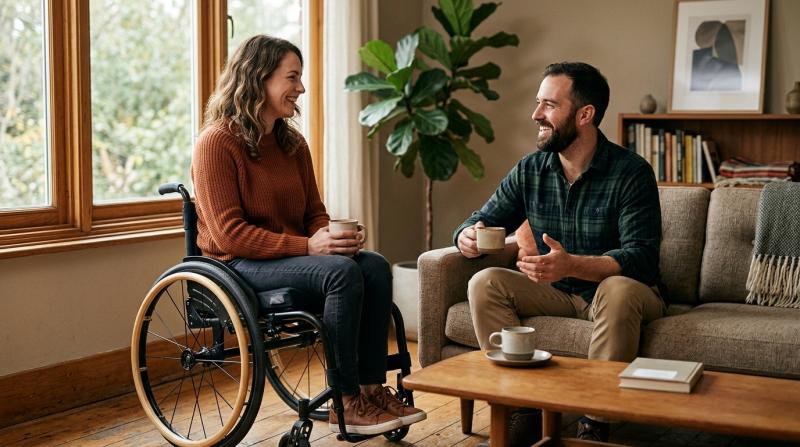
This guide reviews the dating sites we believe are worth your time if you are disabled, neurodivergent, chronically ill, or live with a long-term condition. We cover what each site does well, what it does badly, who it is best for, and what to expect when you sign up. The goal is honesty rather than hype. If a site is small, we say so. If it is dated, we say that too. You can then make an informed call rather than gambling on whichever ad showed up in your feed.
Why Niche Disability Dating Sites Beat Mainstream Apps
Disabled singles tell us the same thing over and over. On the big apps you spend half your energy deciding when, how, and whether to tell a match about your disability, and the other half handling the reactions when you do. By the time you actually meet, you are already exhausted. Niche sites flip that equation. Everyone has either signed up because they have a disability themselves or because they are open to dating someone who does. The disability conversation is no longer a hurdle, it is part of the baseline.
Niche sites also tend to be smaller and quieter. That sounds like a downside, but it usually is not. A smaller pool with relevant members beats a huge pool of mismatched ones every time. Communication is calmer, profiles are fuller, and the people who stay tend to be there for the long haul rather than chasing dopamine hits. If you have ever burnt out on mainstream apps, this slower pace is part of the appeal.
Finally, there is the practical side. Many disabled people deal with fatigue, communication needs, sensory sensitivities, or simply less spare time and energy than the average person on Bumble. Niche sites are designed around longer messages, written profiles, and asynchronous chat rather than relentless swiping. That format is genuinely easier to use when your spoons are limited.
How We Reviewed These Sites
For each site below we created a profile, browsed the membership for a couple of weeks, sent and received messages, and evaluated five things. First, the size and activity of the US membership, since a beautiful site with no one on it is useless. Second, the quality of the profile system and how much room you have to actually describe yourself, your needs, and what you are looking for. Third, accessibility for screen readers, keyboard navigation, and people with motor or cognitive differences. Fourth, the safety tools and reporting infrastructure. Fifth, the price tag and what you actually get for it.
We did not get paid by any of the sites we reviewed. We do, however, run partner relationships with some of the operators behind them, which means we earn a small referral fee if you sign up through one of our links. That model lets us keep this site free for readers and free of intrusive ads. It does not change what we say. A site we like is a site we like, and a site we do not is going to hear about it.
DisabilityMatch: Best Overall for US Disabled Singles
If you only have time to try one site, this is the one we recommend. DisabilityMatch is a dedicated dating site for adults with any kind of disability or long-term condition. The membership skews UK-heavy by history, but the US base has grown steadily and the site treats American members as a first-class audience rather than an afterthought.
What we liked. The sign-up flow asks you about your disability, but in a way that feels respectful rather than clinical. You can be as specific or as general as you want. The profile builder gives you space to write, including a section for what you would like a partner to know about your condition without you having to repeat it on every first chat. Search filters cover the basics like age and location, and there are sensible options for filtering by lifestyle compatibility. Photos are optional, which matters if you would rather lead with words.
What was less good. The interface is functional rather than slick. If you have come from Tinder or Hinge expecting a glossy mobile experience, the desktop-leaning design will feel old-school. The mobile site works, but it is not as polished as the native apps you will be used to. We would also like to see more video and voice messaging options for members who find typing tiring.
Who it is best for. Anyone in the US who wants a community where disability is the default rather than an awkward disclosure. Particularly strong if you have a physical disability or chronic illness and want a partner who already gets it. Less specialized for autistic adults, where dedicated autism dating sites do a slightly better job. We cover this in the next section.
Pricing. Free to register and browse. A paid upgrade unlocks unlimited messaging and a few profile boosters. The upgrade is worth it if you plan to message more than a handful of members.
Autistic Dating: Best for Adults on the Spectrum
For autistic adults, neurotypical dating apps can be a particularly bad fit. The unwritten rules around timing, banter, sarcasm, and small talk are exhausting to decode, and the profile formats reward a kind of social performance that is the opposite of what most autistic singles want. Autistic Dating is built specifically for autistic adults and people who are happy dating autistic adults.
What we liked. The profile system rewards depth. There is space to write properly about your interests, special interests included, your sensory preferences, and the kind of socializing you enjoy or avoid. Members tend to write substantial profiles rather than the three-word bios you see elsewhere. The tone of the site is calm. There is none of the high-pressure swipe energy that makes mainstream apps so draining. Photos are optional and never the main attraction.
The community itself is the standout feature. Plenty of members talk openly about being late-diagnosed, masking, sensory needs, and routine, which makes it easier to be honest about your own experience. We saw very little of the predatory or fetishising behavior that sometimes crops up on broader sites.
What was less good. The US membership is smaller than the UK and Australian membership, so depending on where you live, you may need to be patient or open to long-distance correspondence at the start. Search by location is solid but the pool thins out outside major metros. The site itself is plain. If you care about visual polish, this is not it. We mostly took that as a feature rather than a bug.
Who it is best for. Autistic adults of any age, whether self-identified or formally diagnosed. Also a good fit for ADHD adults and other neurodivergent people who recognize themselves in autistic communication norms. Partners and allies are welcome but the center of gravity is autistic-by-autistic dating.
Pricing. Free registration with a paid messaging upgrade. The economics are similar to DisabilityMatch and the upgrade is worth taking if you want to actually chat with people rather than wave at them.
Spectrum Singles: Best for Long, Compatibility-First Profiles
Where Autistic Dating is general-purpose for autistic adults, Spectrum Singles takes a more compatibility-driven approach. It is built around a longer questionnaire that maps you against potential matches on values, communication style, sensory preferences, and life goals. Think of it as the slower, deeper cousin to swipe apps.
What we liked. The matching test is thoughtful and clearly written by people who understand the spectrum from the inside. Questions cover sensory tolerances, social energy, and routine in ways that mainstream personality tests never bother with. The match scores are detailed enough to give you a real sense of fit before you message someone, which saves time and energy on dead-end chats.
The site supports both autistic-with-autistic dating and autistic-with-allistic dating, and is honest about which mode you are in. The profile pages are calm, with sensible defaults and no pressure to add photos. We found member quality to be high, with substantial bios and considered first messages.
What was less good. The site looks a bit dated and the search experience is less flexible than DisabilityMatch. US membership is growing but, as with Autistic Dating, you may find more matches in major US cities than in rural areas. We would also like to see more video introductions for members who prefer face over text.
Who it is best for. Autistic adults who want to lead with compatibility scores rather than browse profiles cold. Also good for partners or allies who want a structured way to understand a potential match's needs. If your past mainstream-app experience has been a string of mismatches, the Spectrum Singles approach is a meaningful change of pace.
Pricing. Free to take the test and view matches. Messaging requires a subscription, which is in the same ballpark as the other sites in this guide.
Other Sites Worth Knowing About
The three sites above are our main recommendations for disabled US singles. There are a handful of others worth a brief mention.
Mainstream apps with strong accessibility. OkCupid stands out for its long-form question system and strong support for diverse identities. It is not a niche disability site, but if you want a bigger pool and you are comfortable disclosing on your own terms, it is the most disability-friendly mainstream option in the US. Hinge has improved on accessibility but still leans heavily on photo-first browsing. Tinder we cannot recommend if your dating life would benefit from anything other than the briefest of introductions.
Health-condition specific sites. There are specialist sites for HIV-positive singles, sites for people with herpes, and a couple of dedicated communities for wheelchair users. Quality varies wildly. We have not reviewed these in depth here. If you have a specific condition and want a community where it is shared, search for it directly and read recent member reviews before paying for anything.
Disability-positive Facebook groups. Not a dating site as such, but the regional and condition-specific Facebook groups for disabled singles in the US can be a useful complement to the dedicated sites. They are not designed for romance, but friendships and connections that turn romantic do happen, and the moderation tends to be supportive.
Practical Tips for Dating Online with a Disability
Whichever site you pick, a few practical things will make your experience better. Write your profile in your own voice. The temptation to sound upbeat and undemanding can mean you end up matching with people who do not actually fit your life. A profile that is honest about your needs and your strengths attracts the right people and quietly filters out the wrong ones.
Decide ahead of time how much you want to share and when. There is no universal right answer to whether you should mention your disability in your bio, in your first message, before a video call, or before meeting in person. Some people prefer everything up front, others prefer to build a connection first. Both are valid. What matters is that you have a plan rather than improvising it under pressure on every match.
Use video calls before in-person dates if your energy budget is limited. Video gives you a much better sense of someone than text and saves the cost of a wasted trip if the chemistry is not there. If video itself is hard, audio calls are an underrated middle ground.
Plan for accessibility on first dates. Pick venues you have been to before, where you know the lift situation, the noise level, and where the bathrooms are. A first date you can leave early without difficulty is much less stressful than one where you are stuck. The right partner will not just understand this, they will appreciate your clarity.
If you want broader background reading, our guide to niche dating sites in the USA covers the wider picture, our sober dating sites guide may be relevant if you are also in recovery, and our widow and widower dating guide covers a related niche where mainstream apps fall similarly short.
Frequently Asked Questions
Are disability dating sites in the US worth paying for?
For most users, yes, at least for a month or two. Free registration lets you check the membership and decide if there are people you want to talk to. The paid upgrade unlocks the messaging that turns a profile-browsing session into actual dating. Treat the first paid month as the experiment that tells you whether the site is right for you.
Should I disclose my disability in my profile?
On a dedicated disability dating site, yes. The whole point of these sites is that disability is part of the conversation from the start. Specifying what your condition involves saves both you and your matches a lot of time. On mainstream sites the answer is more personal. Some people prefer to disclose up front, others wait until a connection has formed. Both are fine. What matters is that you are doing it on your own terms rather than being forced into it by an awkward question on date one.
Are these sites safe to use?
The sites we have reviewed have moderation and reporting tools and have been operating for years without major scandals. As with any online dating, your own due diligence matters. Verify identities by video before meeting in person, share your plans with a friend, choose public venues for first dates, and trust your instincts if something feels off. Disabled people are not at higher risk online than anyone else, but predators do exist on every platform, and the same precautions that apply to non-disabled singles apply here too.
What if I am chronically ill rather than physically disabled?
You are absolutely welcome on these sites. Chronic illness is part of the disability spectrum and members talk openly about energy management, flares, hospital stays, and pacing. DisabilityMatch in particular has a substantial chronic illness contingent. You will not be the odd one out.
Do these sites help with dating after a recent diagnosis?
Yes. Plenty of members have joined within the first year or two of a new diagnosis and the community is generally supportive about that adjustment. If you are still working out how disability fits into your sense of self, dating someone who has been there can be a quiet relief. The conversations you have on these sites tend to be more thoughtful than the small talk on mainstream apps, and that often serves people in early diagnosis particularly well.